

Anatomy of a Tsunami
Gigantic ocean waves capable of devastating entire coastal communities, tsunamis are among the most powerful and destructive natural events on Earth. Unlike regular ocean waves driven by wind, tsunamis are caused by the sudden displacement of massive volumes of water usually triggered by underwater earthquakes, volcanic eruptions, or landslides. In recent decades, improved monitoring systems and global awareness have helped reduce loss of life, but tsunamis remain a serious threat to coastal regions around the world.
Modern science has significantly improved our understanding of tsunamis, especially after major events such as the 2004 Indian Ocean tsunami and the 2011 Japan tsunami. These disasters reshaped global emergency response systems, leading to better early warning networks, evacuation planning, and coastal protection strategies. However, despite technological advances, tsunamis can still strike with little warning, making awareness and preparedness critical.
 What Is a Tsunami?
A tsunami is a series of powerful ocean waves caused by the sudden displacement of water. Contrary to the outdated term “tidal wave,” tsunamis are not related to tides or the gravitational pull of the moon. Instead, they are generated by geological events beneath or near the ocean.
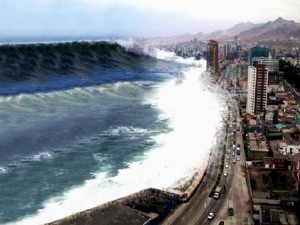
In deep ocean waters, tsunami waves can travel at speeds of up to 800 km/hour, similar to a commercial jet yet remain barely noticeable in height. As they approach shallow coastal areas, the waves slow down but grow dramatically in height, sometimes reaching over 10 metres or more, causing widespread flooding and destruction.
Main Causes of Tsunamis
Tsunamis are most commonly caused by large-scale disturbances in the ocean. These include:
- Underwater Earthquakes: The leading cause of tsunamis, particularly along subduction zones where tectonic plates collide.
- Volcanic Eruptions: Explosive eruptions or collapses can displace large amounts of water.
- Underwater Landslides: Sudden movement of sediment or rock beneath the ocean can generate waves.
- Glacial Calving: Large ice masses breaking off into the sea can trigger localised tsunamis.
- Meteorite Impacts (Rare): A large object hitting the ocean can create massive waves.
- Man-Made Events: Underwater explosions or nuclear testing can create smaller-scale tsunami-like waves.
How a Tsunami Forms
Most destructive tsunamis occur along tectonic plate boundaries. When two plates collide, one may be forced beneath the other in a process called subduction. Over time, pressure builds until it is suddenly released in the form of an earthquake. This abrupt movement lifts or drops the seafloor, displacing water and generating waves that radiate outward in all directions.
In deep water, these waves are fast but low. As they reach shallower coastal regions, they slow down and increase in height, forming powerful surges that can flood inland areas within minutes.
Key Characteristics of Tsunamis
- Can travel across entire ocean basins
- Wave speed can exceed 700–800 km/h in deep water
- Wave height increases dramatically near shore
- Often arrive as a series of waves, not just one
- The first wave is not always the largest
- Can continue for several hours after the initial impact
Warning Signs of a Tsunami
Recognising early warning signs can save lives. People in coastal areas should act immediately if they notice any of the following:
- Strong or prolonged earthquake: Especially if lasting more than 20 seconds
- Sudden retreat of the ocean: Water rapidly pulling away from the shoreline
- Unusual ocean sounds: Loud roaring noise similar to a train or jet
- Official warnings: Alerts issued via sirens, mobile notifications, or emergency broadcasts
If any of these signs occur, move immediately to higher ground or inland do not wait for confirmation.
Major Tsunami Events in Modern History
- 2004 – Indian Ocean Tsunami (Magnitude 9.1): One of the deadliest natural disasters in history, affecting over 14 countries and causing more than 230,000 deaths.
- 2011 – Japan Tsunami (Magnitude 9.1): Triggered by the Tōhoku earthquake, causing widespread destruction and the Fukushima nuclear disaster.
- 1960 – Chile Tsunami (Magnitude 9.5): The largest earthquake ever recorded, generating waves across the Pacific Ocean.
- 2018 – Indonesia Tsunami: Caused by volcanic activity and underwater landslides, highlighting non-earthquake tsunami risks.
Recent Insights and Developments
In recent years, tsunami detection and response systems have improved significantly. Global monitoring networks now use seismic sensors, ocean buoys (DART systems), and satellite data to detect potential tsunamis in real time. Many countries in high-risk zones have also implemented better coastal evacuation plans, signage, and public education programs.
Climate change and rising sea levels are also increasing the potential impact of tsunamis. Even smaller waves can now cause greater flooding in low-lying coastal regions, making preparedness more important than ever.
Useful Tips and Safety Information
If you live in or travel to coastal areas, understanding tsunami safety is essential. Always familiarise yourself with local evacuation routes and warning systems. If an earthquake occurs near the coast, do not wait move to higher ground immediately. Avoid returning to the shoreline after the first wave, as multiple waves can follow over several hours.
Prepare an emergency kit with essentials such as water, food, a flashlight, and communication devices. Stay informed through official sources, and always follow instructions from local authorities. While tsunamis are rare, being prepared can make a life-saving difference.
Next Read: The Pacific Ring of Fire