
Exploring the Red Planet, Latest Discoveries & Future Plans
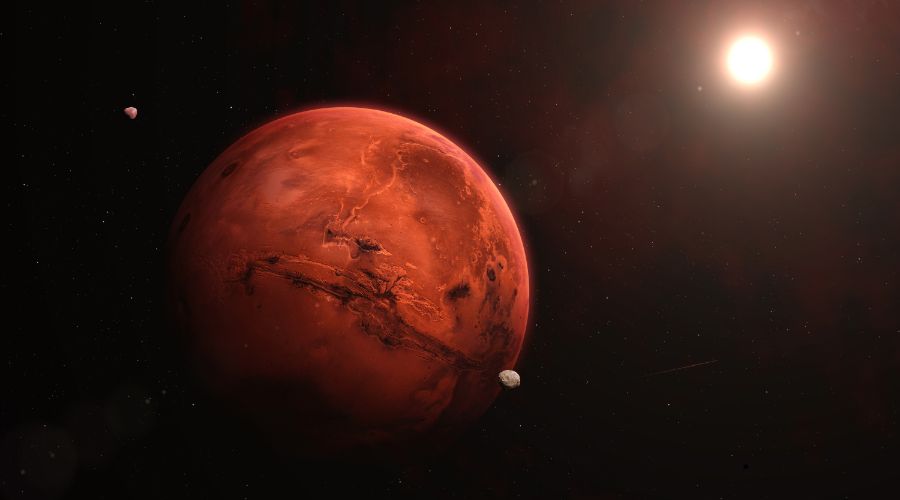
Mars, often called the Red Planet, has fascinated humanity for centuries. Named after the Roman god of war due to its reddish appearance, Mars is the fourth planet from the Sun and one of Earth’s closest neighbors in the solar system. Today, it is one of the most explored planets, with multiple robotic missions studying its surface, atmosphere, and potential for life. Scientists now believe that Mars was once warmer, wetter, and possibly habitable billions of years ago raising one of the biggest questions in science: did life ever exist there?
In 2026, Mars continues to be at the center of global space exploration. NASA’s Perseverance rover is actively collecting samples and uncovering evidence of ancient water systems, while future missions aim to return these samples to Earth and eventually send humans to the planet. With rapid technological advancements and increasing international collaboration, Mars may soon become humanity’s next frontier.
What Is Mars?
Mars is a cold, rocky desert world with a thin atmosphere composed mostly of carbon dioxide. It is about half the size of Earth and has a day length similar to ours (approximately 24.6 hours). However, a year on Mars lasts 687 Earth days.
- Distance from the Sun: ~228 million km
- Surface temperature: Can range from -125°C to 20°C
- Moons: Phobos and Deimos
- Known for: Giant volcanoes, deep canyons, and dust storms
Mars is also the only planet we know that is entirely explored by robots, with rovers like Curiosity and Perseverance acting as our eyes and hands on the surface.
5 Important Facts About Mars (Explained)
1. Mars Was Once Covered in Water
One of the most exciting facts about Mars is that it once had rivers, lakes, and possibly oceans. In 2026, NASA’s Perseverance rover discovered ancient underground river systems dating back over 3.7 billion years, confirming that water played a major role in Mars’ early history.
2. Mars Has the Largest Volcano in the Solar System
Olympus Mons, located on Mars, is the tallest volcano known in the solar system nearly three times the height of Mount Everest. This highlights Mars’ dramatic geological history.
3. Mars Has a Thin Atmosphere
Mars’ atmosphere is too thin to support liquid water on the surface today. It also offers little protection from solar radiation, making it a challenging environment for future human missions.
4. Mars Experiences Extreme Weather
Despite being a desert planet, Mars has powerful dust storms that can cover the entire planet. It also has seasons similar to Earth due to its axial tilt.
5. Mars May Have Supported Life in the Past
Scientists are not expecting to find life on Mars today, but they are actively searching for signs of ancient microbial life. Organic compounds discovered in Martian rocks suggest that the building blocks of life may have existed.
What Are Humanity’s Plans for Mars?
Humanity’s interest in Mars goes beyond exploration it is about future habitation. Space agencies and private companies are working toward long-term missions.
- Mars Sample Return: Collecting Martian soil and bringing it back to Earth for analysis
- Human Missions: NASA aims to send astronauts to Mars in the 2030s
- New Technologies: Autonomous navigation and AI-driven rovers
- Future Missions: A nuclear-powered spacecraft planned for launch before 2028 to explore Mars more efficiently.
As one scientist explained when studying Mars’ environment: “Before we send humans to Mars, we need to understand what type of environment these astronauts are going to encounter.”
Latest News About Mars
- NASA’s Perseverance rover discovered ancient river delta structures beneath the surface, strengthening evidence that Mars once had flowing water
- New mysterious “spiderweb-like” rock formations have been found, possibly linked to ancient groundwater systems
- Upcoming missions aim to better understand Mars’ atmosphere and prepare for human exploration
These discoveries are helping scientists piece together Mars’ history and its potential to support life in the distant past.
Why Mars Matters
- Helps us understand the history of planets, including Earth
- Provides clues about the possibility of life beyond Earth
- Acts as a testing ground for future space exploration
- Could become a future destination for human settlement
Frequently Asked Questions (FAQ)
Is there life on Mars?
There is currently no confirmed evidence of life on Mars, but scientists are searching for signs of ancient microbial life.
Why is Mars called the Red Planet?
Mars appears red because of iron oxide (rust) on its surface.
Can humans live on Mars?
Not yet. Mars has extreme conditions, including low temperatures and a thin atmosphere, but future missions aim to make human exploration possible.
How long does it take to travel to Mars?
It typically takes around 6 to 9 months using current technology, though future propulsion systems may shorten this time.
Why do scientists study Mars?
Mars may hold clues about the origins of life and the future of human space exploration.
What’s to come
Mars remains one of the most exciting and mysterious places in our solar system. From ancient water systems to modern robotic missions, every discovery brings us closer to understanding whether life once existed there and whether humans could one day call it home.
As technology advances and global interest in space exploration grows, the Red Planet may soon transition from a distant world to humanity’s next great destination.