Global Warming Threat: Facts, Causes, Impacts & What We Can Do
Global warming is no longer a distant concept found only in books or news headlines it is a present-day reality affecting ecosystems, economies, and communities worldwide. Over the past few decades, scientific evidence has confirmed that the Earth’s climate is warming at an unprecedented rate, largely driven by human activity. Rising temperatures, extreme weather events, melting ice caps, and sea-level rise are clear signs that climate change is accelerating.
In 2026, global warming is widely recognised as one of the most urgent challenges facing humanity. While progress has been made in renewable energy and climate policies, greenhouse gas emissions remain high. The situation is serious but not irreversible. With collective action, innovation, and awareness, the worst impacts can still be mitigated.
What Is Global Warming?
Global warming refers to the long-term increase in Earth’s average surface temperature due to the accumulation of greenhouse gases in the atmosphere. These gases trap heat from the sun, creating a “greenhouse effect” that warms the planet.
- Carbon dioxide (CO₂): The primary greenhouse gas from fossil fuel use
- Methane (CH₄): A potent gas released from agriculture, waste, and energy production
- Nitrous oxide (N₂O): Emitted from farming and industrial processes
While the greenhouse effect is natural and necessary for life, human activities have intensified it, leading to rapid climate change.
Main Causes of Global Warming
- Burning Fossil Fuels: Coal, oil, and gas used for electricity, transport, and industry are the largest contributors to CO₂ emissions
- Deforestation: Cutting down forests reduces the planet’s ability to absorb carbon dioxide
- Agriculture and Livestock: Large-scale farming produces methane and nitrous oxide emissions
- Industrialisation: Manufacturing processes release greenhouse gases and pollutants
- Urbanisation: Increased energy demand and infrastructure expansion contribute to emissions
Updated Facts and Key Statistics (2026)
- Global temperatures have risen by approximately 1.1°C to 1.3°C above pre-industrial levels
- The last decade has been the warmest on record
- Energy production accounts for roughly 70%+ of global greenhouse gas emissions
- Methane is over 25 times more effective than CO₂ at trapping heat over a 100-year period
- Sea levels have risen by over 20 cm since 1900, with acceleration in recent decades
Unlike older claims, there is no credible scientific projection that billions of people will die within a few years. However, the long-term risks to human health, food systems, and coastal populations are significant if action is not taken.

Environmental Impacts of Global Warming
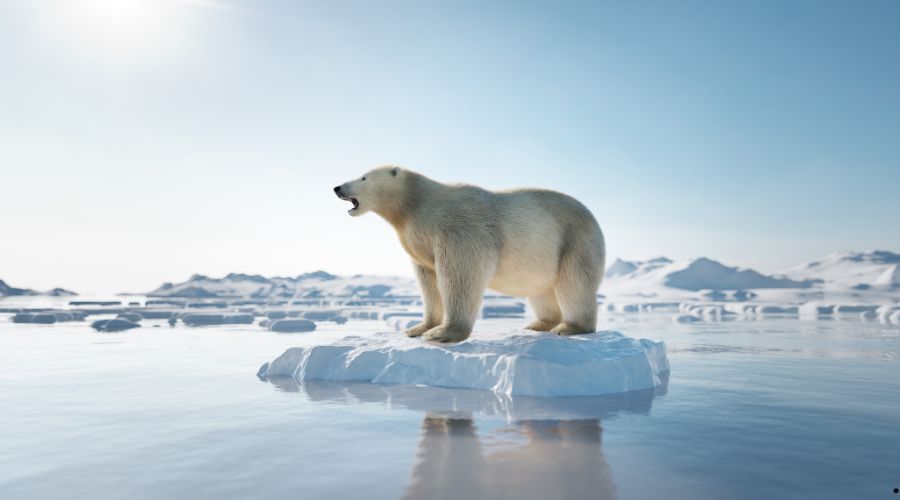
- Melting Glaciers and Ice Caps: Contributing to rising sea levels
- Sea-Level Rise: Threatening coastal cities and island nations
- Extreme Weather Events: More frequent heatwaves, storms, floods, and droughts
- Ocean Warming: Leading to coral bleaching and marine ecosystem damage
- Loss of Biodiversity: Many species struggle to adapt to changing conditions
The Role of Methane and Emerging Risks
Methane is a critical factor in accelerating global warming. It is released from livestock farming, landfills, and fossil fuel extraction. Another concern is methane stored in Arctic permafrost and seabeds. As global temperatures rise, these frozen reserves may thaw and release methane into the atmosphere, further intensifying warming.
Deforestation and the Loss of Natural Protection
Forests play a vital role in absorbing carbon dioxide and regulating the Earth’s climate. However, large-scale deforestation for agriculture, urban development, and industry continues to reduce this natural defence system.
- Trees absorb CO₂ and produce oxygen
- Forests help regulate rainfall and temperature
- Loss of forests accelerates climate change
While reforestation efforts are increasing globally, they are still not enough to offset current emission levels.
Human and Economic Impacts
- Increased health risks due to heatwaves and air pollution
- Food and water insecurity in vulnerable regions
- Displacement of communities due to rising sea levels
- Economic losses from natural disasters and climate damage
Recent Global Actions and Progress
In recent years, governments and organisations worldwide have taken steps to address climate change. Renewable energy adoption is growing rapidly, with solar and wind power becoming more accessible. Many countries have committed to net-zero emissions targets, and climate agreements continue to shape global policy.
However, experts agree that progress must accelerate to meet climate goals and limit warming to safer levels.
What Can We Do to Help?
- Reduce energy consumption and improve efficiency
- Support renewable energy sources
- Use public transport, walk, or cycle where possible
- Reduce waste and recycle responsibly
- Support sustainable agriculture and food choices
- Plant trees and support conservation efforts
- Stay informed and advocate for climate action
Final Thoughts
Global warming is one of the defining challenges of our time. While the impacts are already being felt, the future is not set in stone. With the right combination of awareness, innovation, and collective action, it is still possible to slow down climate change and protect the planet for future generations.
The most important step is to recognise that every action counts. From individual lifestyle changes to global policy decisions, addressing global warming requires a shared responsibility. The sooner we act, the better our chances of creating a more sustainable and resilient world.