Interesting Facts About Cherry Blossoms (Sakura): Hanami Guide & Best Viewing Spots
Cherry blossoms, known as sakura, are one of the most iconic and celebrated natural wonders in Japan. Every year, millions of people locals and tourists alike gather to witness the breathtaking bloom that transforms parks, streets, and landscapes into soft shades of pink and white. In 2026, sakura season continues to be one of the most anticipated cultural events, symbolising beauty, renewal, and the fleeting nature of life.
The tradition of enjoying cherry blossoms, called Hanami, dates back over a thousand years. Today, it remains a deeply rooted cultural practice in Japan, where families, friends, and communities gather under blooming trees to relax, celebrate, and appreciate nature. From daytime picnics to illuminated night viewing (yozakura), sakura season offers a unique experience that blends tradition, nature, and social connection.
What Is Hanami?
Hanami means “flower viewing” and refers specifically to the appreciation of cherry blossoms during their short blooming period. People celebrate Hanami in various ways:
- Picnicking under cherry trees with family and friends
- Walking through parks and riversides lined with sakura
- Enjoying night-time illuminations known as yozakura
- Attending seasonal festivals, food stalls, and cultural events
The beauty of sakura lies not only in their appearance but also in their brief lifespan, making each viewing season feel special and unique.
Why Cherry Blossoms Are So Special
- Symbol of Transience: Sakura represent the fleeting nature of life, as blooms typically last only 7–10 days
- Cultural Importance: Deeply connected to Japanese philosophy, art, and seasonal traditions
- Seasonal Marker: The bloom coincides with the start of Japan’s school and fiscal year in April
- Tourism Highlight: One of Japan’s biggest travel seasons, attracting millions of visitors annually
Interesting Facts About Sakura
- Japan has over 600 varieties of cherry blossom trees
- The most common variety is Somei Yoshino, known for its pale pink-white flowers
- Cherry blossoms are edible and used in traditional foods like sakura mochi and tea
- A Cherry Blossom Forecast (Sakura Zensen) tracks bloom progression across Japan each year
- Full bloom is called Mankai, usually lasting less than a week
- Petals falling after peak bloom create a phenomenon known as “sakura snow”
- Cherry trees have been gifted globally as symbols of friendship (e.g. Japan to the United States)
- Sakura festivals are now celebrated worldwide in countries like Australia, Canada, and Germany
When Do Cherry Blossoms Bloom?
The timing of sakura season varies depending on location and climate conditions. Warmer regions bloom earlier, while northern areas bloom later.
- Late March to early April: Tokyo, Kyoto, Osaka
- Mid to late April: Northern Japan (Tohoku region)
- Late April to early May: Hokkaido
Weather plays a key role warmer temperatures can cause earlier blooms, while colder conditions may delay them. This is why the annual forecast is closely followed by locals and travellers.
Best Places to See Cherry Blossoms in Japan
Ueno Park, Tokyo
One of Tokyo’s most popular Hanami spots, featuring over 1,000 cherry trees lining the pathways. The park becomes lively with festivals, food stalls, and evening illuminations.
Shinjuku Gyoen National Garden, Tokyo
A spacious and beautifully maintained garden with multiple cherry tree varieties, allowing visitors to enjoy blossoms over an extended period.
Lake Kawaguchiko (Mount Fuji Area)
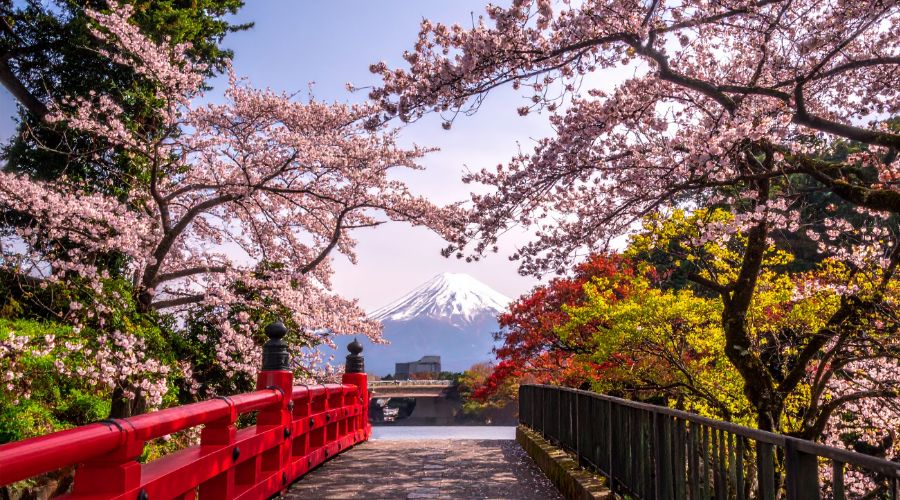
Offers stunning views of cherry blossoms with Mount Fuji in the background. Early morning visits provide the clearest and most picturesque scenery.
Chureito Pagoda, Fujiyoshida
A famous photography spot where the pagoda, cherry blossoms, and Mount Fuji align in one breathtaking frame.
Maruyama Park, Kyoto
Known for its iconic weeping cherry tree and vibrant evening Hanami atmosphere with food stalls and light displays.
Arashiyama, Kyoto
Cherry blossoms along the Togetsukyo Bridge and surrounding mountains create a peaceful and scenic setting, ideal for daytime visits.
Cherry Blossoms Around the World
While Japan is the most famous destination for sakura, cherry blossoms can also be found globally:
- Australia (Sydney, Cowra Japanese Garden)
- United States (Washington, D.C.)
- Canada (Vancouver)
- South Korea (Seoul, Jinhae)
- China (Wuhan, Beijing)
- Germany and the Netherlands
- United Kingdom (London parks)
These locations host their own cherry blossom festivals, inspired by Japanese traditions.
Recent Trends and Insights
In recent years, climate change has begun to impact sakura blooming patterns, with some regions experiencing earlier or less predictable flowering times. Tourism demand has also grown significantly, making cherry blossom season one of the busiest travel periods in Japan.
To manage crowds, many cities now promote lesser-known viewing spots and extend festival periods. Night illuminations and digital forecasts have also enhanced the Hanami experience for modern travellers.
Tips for Enjoying Cherry Blossom Season
- Check the official cherry blossom forecast before planning your trip
- Visit early in the morning or late afternoon to avoid crowds
- Bring a picnic mat for Hanami gatherings
- Respect local etiquette and keep parks clean
- Be flexible with travel dates as bloom timing can change
- Explore both daytime and night-time viewing for different experiences
Cherry blossoms are more than just a seasonal attraction they are a cultural symbol of beauty, renewal, and the fleeting nature of life. Whether you experience them in Japan or elsewhere in the world, sakura season offers a unique opportunity to slow down, appreciate nature, and connect with tradition.
Because the bloom is short-lived, timing and preparation are key. With the right planning, witnessing cherry blossoms in full bloom can be one of the most memorable travel experiences you will ever have.