

10 Interesting Facts About the Sun: History, Science & Latest Discoveries
The Sun is the center of our solar system and the source of almost all life on Earth. This massive glowing star has fascinated civilizations for thousands of years, inspiring mythology, science, religion, and space exploration. In 2026, the Sun remains one of the most studied objects in space, with scientists constantly monitoring its activity to better understand solar storms, climate effects, and the future of our solar system. Without the Sun, Earth would be a frozen and lifeless planet.
Although we see the Sun every day, there are still many incredible facts and mysteries surrounding it. Modern space missions like NASA’s Parker Solar Probe and the European Space Agency’s Solar Orbiter are helping scientists uncover new information about how the Sun works and how it affects Earth. From extreme temperatures to powerful solar eruptions, the Sun is far more complex and powerful than most people realize.
What Is the Sun?
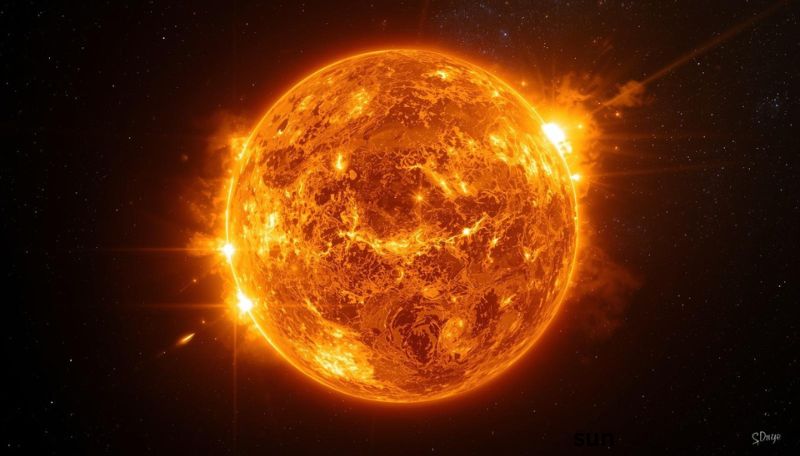
The Sun is a giant ball of hot plasma made mostly of hydrogen and helium. It formed approximately 4.6 billion years ago and contains more than 99% of the total mass of our solar system.
- Type: G-type main-sequence star
- Age: About 4.6 billion years
- Distance from Earth: Approximately 150 million kilometers (93 million miles)
- Surface temperature: Around 5,500°C (9,932°F)
- Core temperature: Around 15 million°C (27 million°F)
The Sun generates energy through nuclear fusion, where hydrogen atoms combine to form helium and release enormous amounts of energy.
10 Interesting Facts About the Sun
1. The Sun Contains Almost All the Mass in the Solar System
The Sun makes up about 99.8% of the total mass of the solar system. Every planet, moon, asteroid, and comet revolves around it due to its immense gravitational pull.
2. Light From the Sun Takes About 8 Minutes to Reach Earth
Although the Sun is incredibly far away, sunlight travels at the speed of light and reaches Earth in about 8 minutes and 20 seconds.
3. The Sun Is Hotter Than Most People Imagine
While the surface temperature is already extreme, the Sun’s core is much hotter reaching approximately 15 million°C where nuclear fusion occurs.
4. The Sun Creates Powerful Solar Storms
The Sun regularly releases solar flares and coronal mass ejections (CMEs), which can affect satellites, GPS systems, power grids, and communications on Earth.
- Can disrupt radio signals
- Can create beautiful auroras (Northern and Southern Lights)
- Pose risks to astronauts and spacecraft
5. The Sun Is Constantly Moving
The Sun is not stationary. It travels through the Milky Way galaxy at around 220 kilometers per second, orbiting the center of the galaxy.
6. The Sun Has Layers
The Sun is made up of several layers:
- Core
- Radiative Zone
- Convective Zone
- Photosphere
- Chromosphere
- Corona
The corona, the Sun’s outer atmosphere, can extend millions of kilometers into space.
7. The Sun Will Eventually Become a Red Giant
Scientists estimate that in around 5 billion years, the Sun will expand into a red giant, potentially engulfing Mercury and Venus, and dramatically changing Earth’s environment.
8. Ancient Civilizations Worshipped the Sun
Many ancient cultures viewed the Sun as a god or divine force.
- Egyptians worshipped Ra
- Aztecs worshipped Huitzilopochtli
- Japanese mythology includes the sun goddess Amaterasu
9. The Sun Has an 11-Year Solar Cycle
The Sun goes through cycles of increased and decreased activity approximately every 11 years.
- Solar maximum = more sunspots and solar storms
- Solar minimum = calmer activity
In 2026, scientists are closely monitoring Solar Cycle 25, which has shown stronger-than-expected activity.
10. Scientists Are Sending Spacecraft Closer Than Ever Before
NASA’s Parker Solar Probe became the closest spacecraft ever to the Sun, helping scientists study solar winds and the Sun’s magnetic fields.
According to NASA scientists, understanding the Sun is essential because “space weather can affect technology and life on Earth more than ever before.”
Latest News About the Sun
- Solar activity increased significantly during Solar Cycle 25
- Scientists observed unusually strong solar flares affecting satellite communications
- NASA and ESA missions continue collecting unprecedented solar data
- Researchers are studying the Sun’s impact on climate and space weather
Experts continue to warn that major solar storms could potentially impact global infrastructure, including power grids and internet systems.
Why the Sun Is Important
- Provides heat and light for life on Earth
- Drives Earth’s climate and weather systems
- Supports photosynthesis in plants
- Influences ocean currents and seasons
- Essential for renewable solar energy
Useful Insights
- The Sun is approximately 109 times wider than Earth
- More than one million Earths could fit inside the Sun
- Solar energy is becoming one of the fastest-growing renewable energy sources worldwide
- Scientists use solar observations to better predict space weather events
Frequently Asked Questions (FAQ)
What is the Sun made of?
The Sun is primarily made of hydrogen and helium gas.
How old is the Sun?
The Sun is estimated to be about 4.6 billion years old.
Can humans survive on the Sun?
No. The Sun’s temperatures and radiation levels are far beyond what humans can survive.
Why is the Sun important to Earth?
The Sun provides the energy needed for life, climate, weather, and ecosystems.
Will the Sun eventually die?
Yes. In about 5 billion years, the Sun is expected to become a red giant before eventually shrinking into a white dwarf.
Final Thoughts
The Sun is far more than just a bright object in the sky it is the engine that powers our solar system and sustains life on Earth. From ancient civilizations to modern space missions, humanity has always been fascinated by its immense power and mystery.
As scientific discoveries continue, our understanding of the Sun grows deeper, helping us prepare for future space exploration and better understand the universe around us.